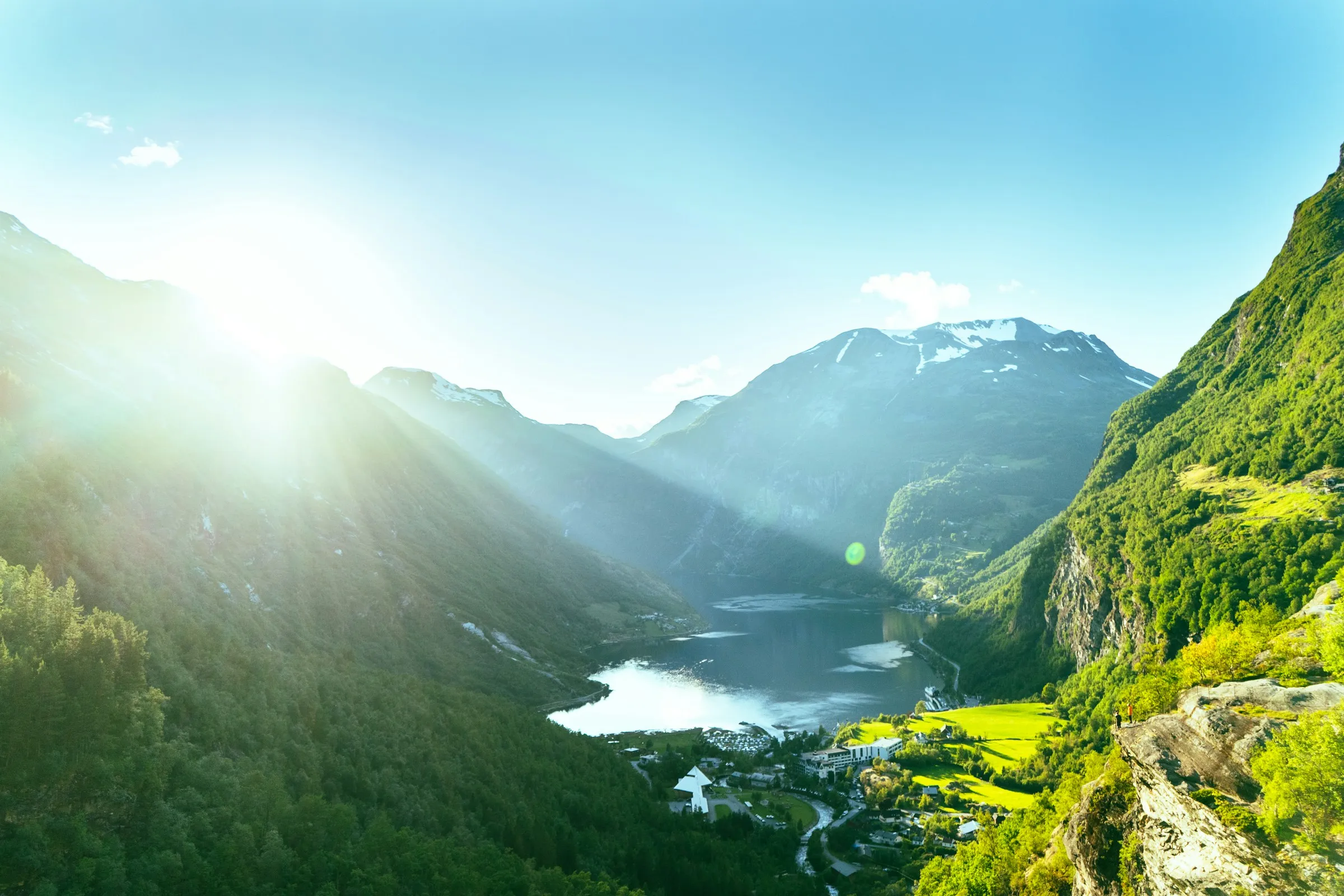
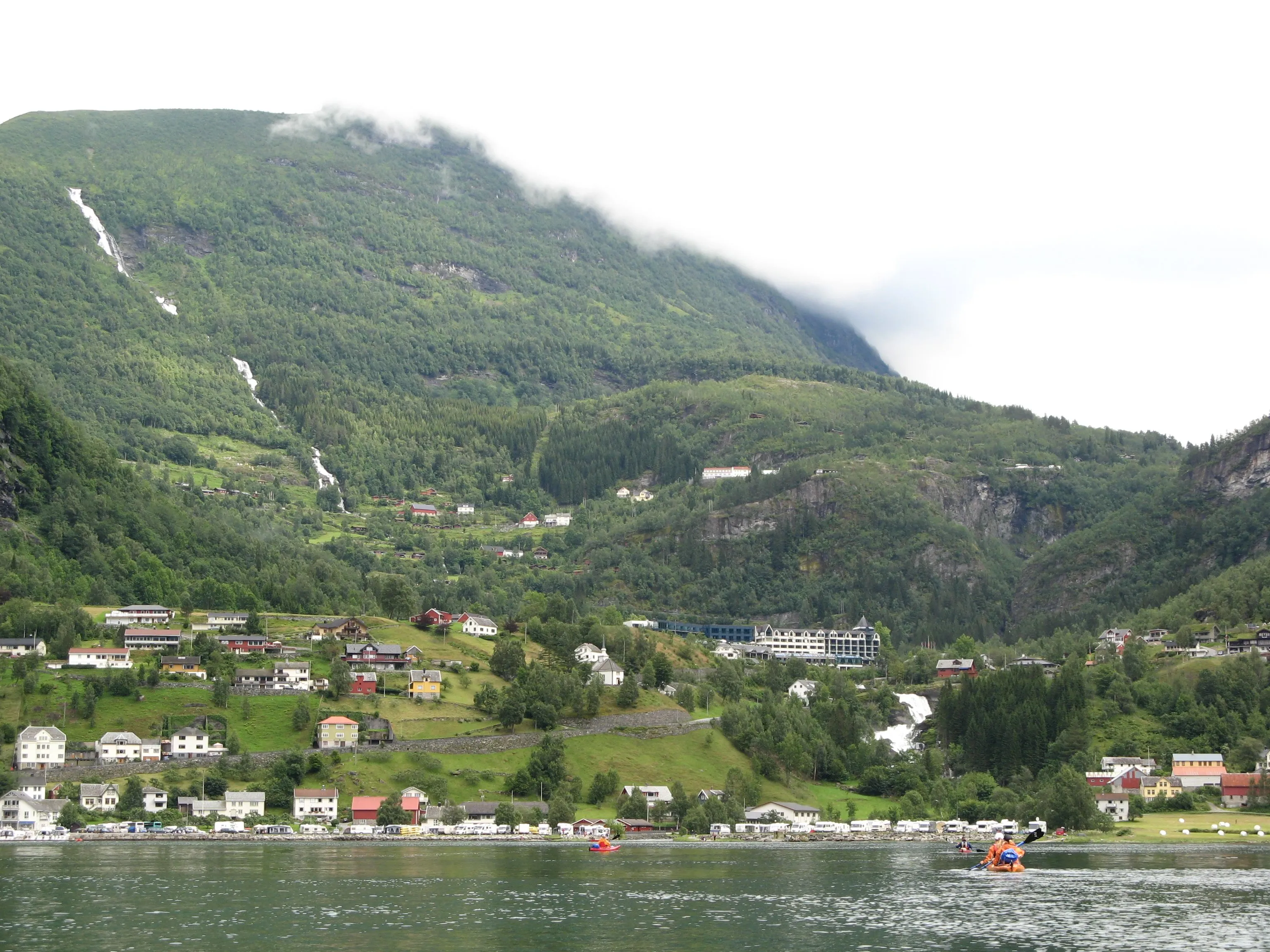
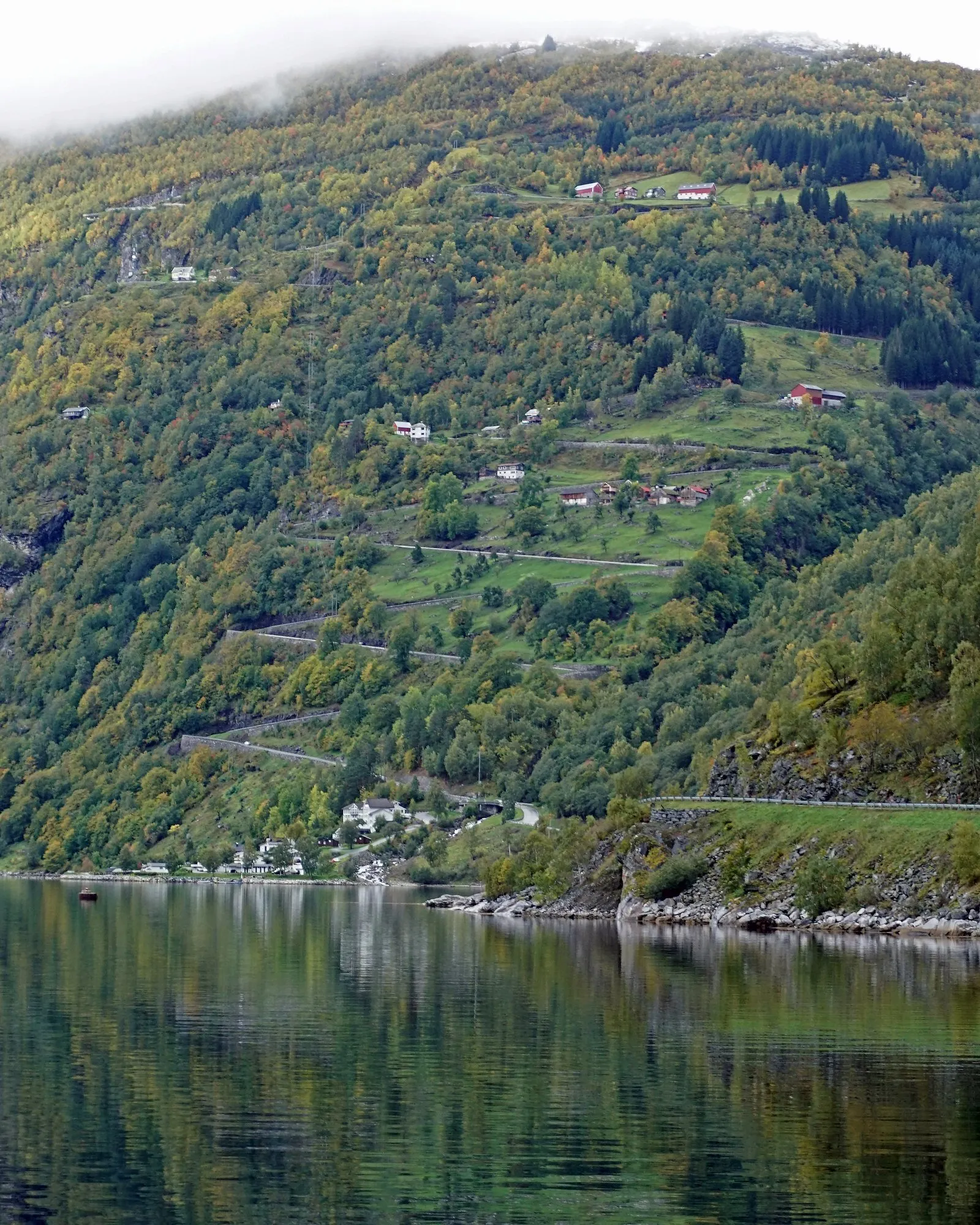
Norway's most famous sail-in: a narrow UNESCO fjord walled by waterfalls, with a village of barely 500 people at its head. Most ships anchor and tender ashore, so the clock starts the moment you queue. The village takes an hour. The reason you came is the view from high above it.
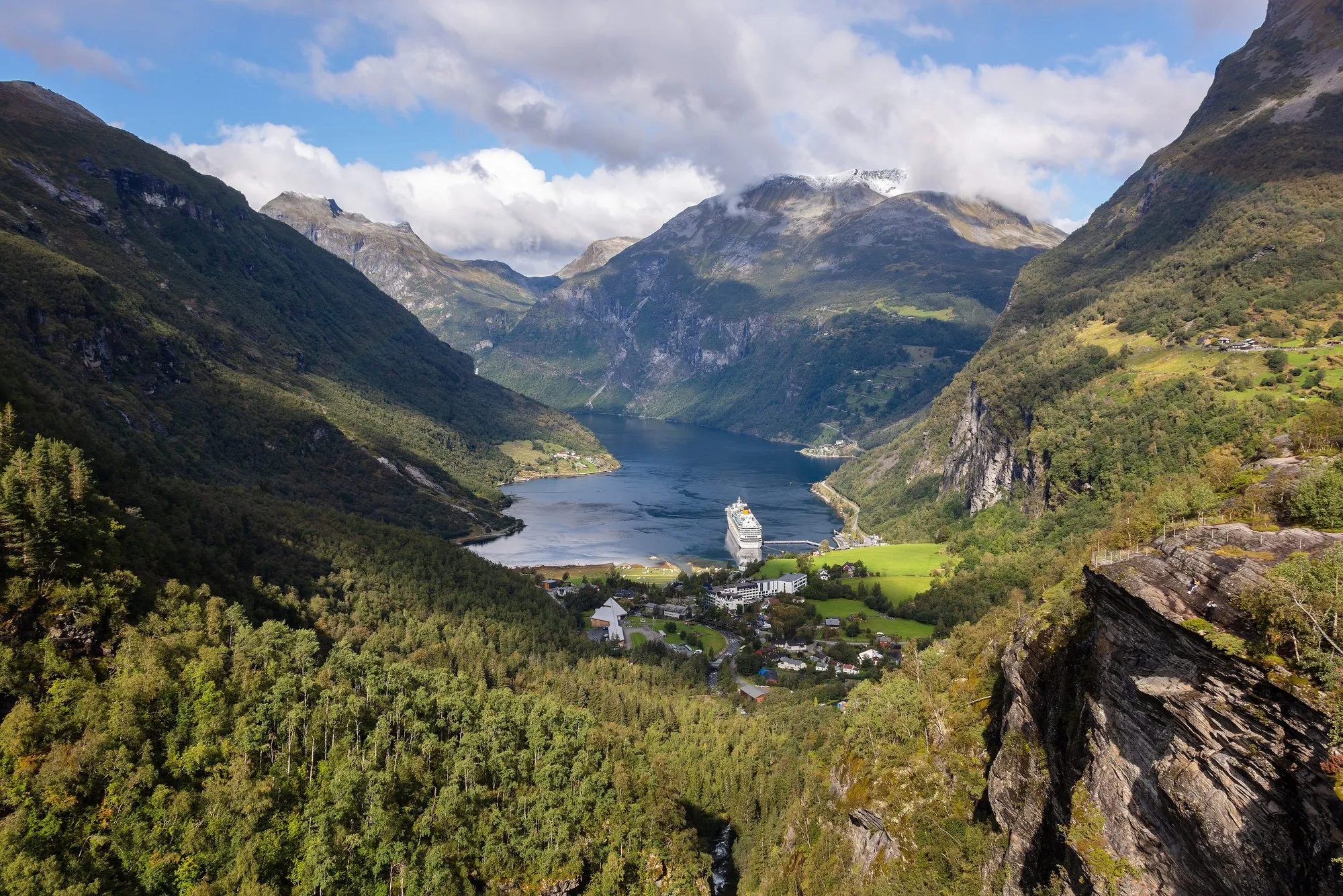
Geiranger is one of Norway’s most spectacular ports to sail into and one of its trickiest to step ashore in. The village is tiny, under 500 residents, so most large ships anchor in the fjord and tender passengers ashore (a short 2–10 minute boat ride). A single ship per day can use the SeaWalk floating pier and walk straight into the village; everyone else tenders. The official Geiranger cruise call list shows every registered ship for the season. A daily cap of five ships / 8,000 cruise visitors keeps the crush in check. The village itself takes about an hour on foot, so the real reason you are here is the scenery above it: the Flydalsjuvet overlook, the Dalsnibba Skywalk at 1,500 m, the Eagle Road (Ørnesvegen) hairpins, and a fjord sightseeing cruise past the Seven Sisters waterfall.
Tender timing is the whole game. On a tender call the last tender back to the ship is your real deadline, and queues bunch up at the end of the day, so build a generous buffer in both directions and treat any long mountain excursion with respect. One note for 2026: the UNESCO fjords now require zero emissions for ships under 10,000 GT, but larger cruise ships have until 2032, so most big-ship calls run as normal; small expedition vessels need zero-emission certification to enter. Only got a short call? See what actually fits in four to six hours.
✓
If this were my port day
If this were my Geiranger day
I would treat the sail-in, the tender clock and one good viewpoint as the day. The village is pleasant but small; the fjord and heights are the reason to be here. On a short or messy-weather call, I would not chase every overlook.
Short call: village, waterfall walk and a fjord cruise if the departure lines up.
Clear long call: choose Flydalsjuvet, Dalsnibba or the Eagle Road, not every mountain stop at once.
Keep the last tender time in your head. In Geiranger, that matters more than squeezing in one more view.
The Port-Day Clock
Start with the clock, then choose the sight.
Set your ship's scheduled arrival and all-aboard time. I allow 30 minutes to get off the ship and hold back a 45-minute safety buffer — then show only what fits with real margin.
Arrive—
—Your time ashore
All aboard—
Drag the two handles to match your ship's arrival and all-aboard times. As you drag, your time ashore updates — and the cards below show what fits.
45min
Drag the handles · snaps to 15 minutes
Time ashore starts 30 min after scheduled arrival, an allowance for getting off the ship. Boat trips with fixed sailings use a 60-min buffer and bus or coach trips 90 min, as the guides advise; where an operator says to arrive well ahead, I allow 15 min.
The same tool, with a port selector, lives on the Port-Day Clock page.
Walk the waterfront, the church and the Fossevandring waterfall steps at your own pace, watching the tender clock. The Flydalsjuvet overlook is a short taxi or tour-bus ride up the road.
Time needed 1–3 hrsDepartures AnytimeBest weather Any
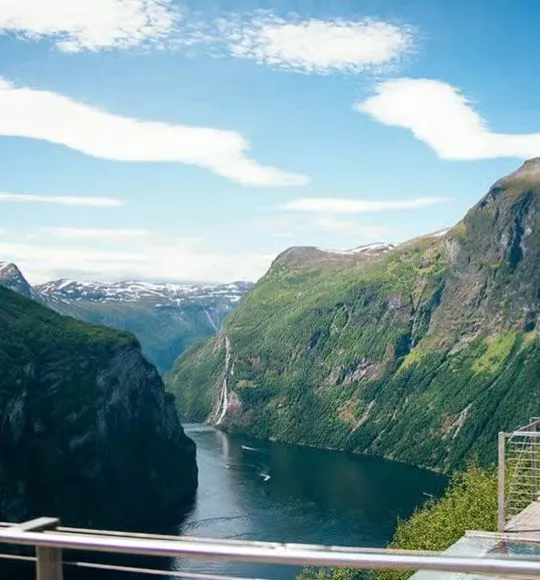
The most photographed view of the fjord, the village and your ship, 4 km up Fv63. Nothing to book: every sightseeing bus up the mountain stops there. How the stop works, and why not to walk it.
Time needed 10 min stopDepartures AnytimeBest weather Clear
Geirangerfjord & Waterfalls Sightseeing Cruise (75 min or 2 hrs)
Wheelchair accessible
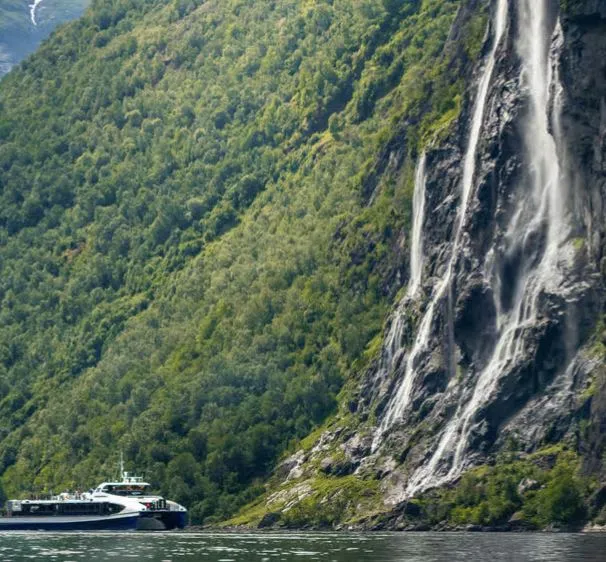
The classic fjord cruise in two lengths: a 75-minute highlights run on a traditional boat, or 2 hours on MS Geirangerfjord III, new for 2026, silent hybrid-electric with big open decks, the first vessel built to meet the new fjord emission rules, and it goes further down the fjord than the 75-minute boat. Either way you sail close under the Seven Sisters, the Suitor and the Bridal Veil, past the cliff farms. Mostly covered, so it runs in light rain, with low transfer risk from the pier.
Time needed 75 min – 2 hrsDepartures Daily · cruise seasonBest weather Any
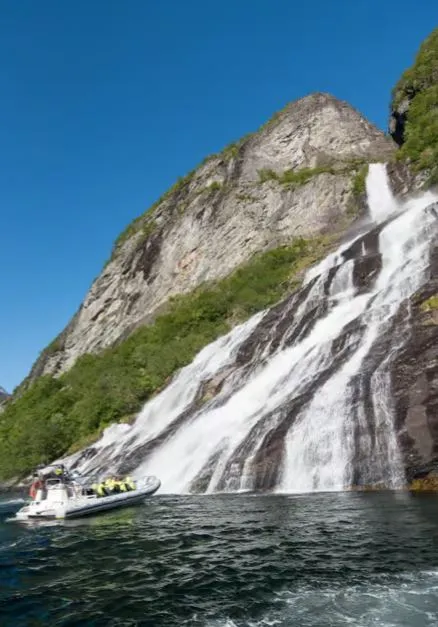
A fast, open RIB with a maximum of 12 guests, straight to the foot of the waterfalls — close enough to taste the spray. Stops at the Seven Sisters and Friaren and the fjord walls from sea level. Spray, speed and a guide.
My caution: Cold and wet, and tender timing still applies. Choose the covered cruise if you want the calmer version.
Time needed 1 hrDepartures Daily · May–SepBest weather Clear
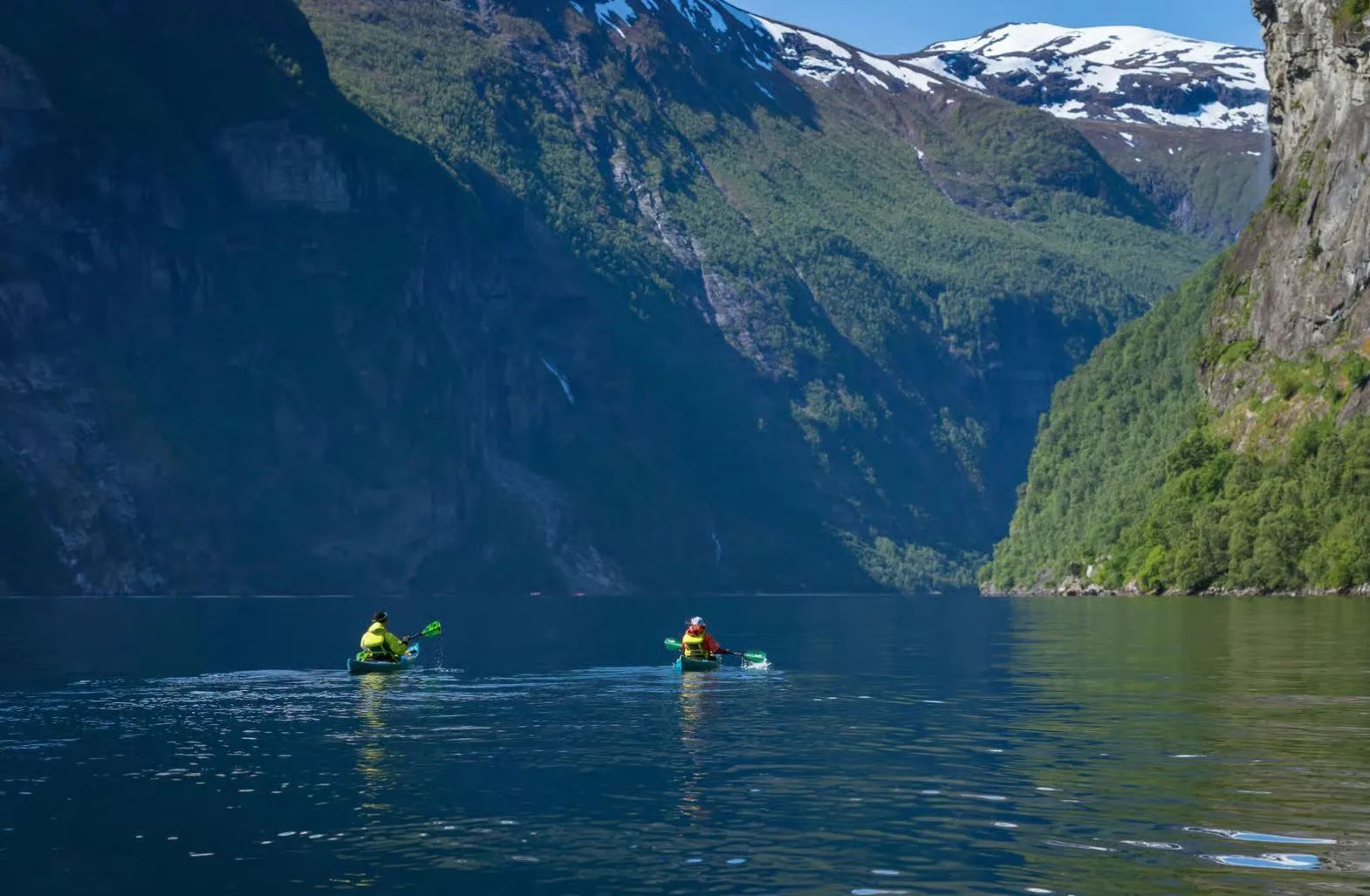
A guided paddle on the sheltered inner fjord with an instructor, out past the Seven Sisters and the Suitor at water level. The quietest way to feel the scale of the place, and beginner-friendly on calm days.
My caution: Three hours on the water, so it only fits a long call — leave four hours between landing and all-aboard. There is also an evening departure: no use to you if the ship sails before dinner.
Time needed 3 hrsDepartures Seasonal · checkBest weather Clear
The full viewpoint tour by coach with live commentary: up to the Geiranger Skywalk on Dalsnibba at 1,500 m, then Flydalsjuvet and the Eagle Bend, with photo stops over the fjord and the Seven Sisters. The big-day way to see the heights.
My caution: Only worth it when the top is clear. If Dalsnibba is in cloud, the summit view is gone, so pick a fjord-level plan. The Dalsnibba road usually opens in late May, weather permitting.
Time needed 3.5 hrsDepartures Daily · May–OctBest weather Clear
A round-trip bus from the village centre up to Flydalsjuvet, then higher to the Dalsnibba Skywalk, and back down. The two big panoramas in a tidy two hours, a good middle option between the short audio loop and the full heights tour.
My caution: Same clear-day rule: the Dalsnibba stop only pays off when the summit is out of cloud.
Time needed 2 hrsDepartures Daily · cruise daysBest weather Clear
Geiranger Bus Tour with Multilingual Audio Guide (80 min)
Wheelchair accessible
An 80-minute loop with audio commentary and photo stops at the main viewpoints, including Flydalsjuvet and the Norwegian Fjord Centre. The easy, low-risk way to see the heights when you are watching the tender clock.
Time needed 80 minDepartures Daily · cruise daysBest weather Clear
Most ships anchor and tender; one ship a day walks the SeaWalk.
Geiranger is mainly a tender port. Large ships anchor out in the fjord and ferry guests ashore by tender, a short 2–10 minute boat ride to the village piers. A single ship per day can rent the SeaWalk floating pier and walk straight in; everyone else tenders, so it is rarely your choice. The viewpoints that make Geiranger are all uphill, reached by bus, taxi or an organised tour. The times below are from the village pier once you are ashore.
Tender landing / SeaWalk pier
You are here
Geiranger village & waterfront
At the pier
Flydalsjuvet overlook
4 km up Fv63 · taxi or tour-bus stop
Dalsnibba Skywalk (1,500 m)
~40 min by bus up Rv63
i
The one connection that matters
On a tender call, the last tender back is your real deadline, not the all-aboard time on the itinerary. Tender queues bunch up at the end of the day and a missed boat can mean a missed ship. Keep mountain excursions (Dalsnibba, Trollstigen) for long calls, leave a generous margin both ways, and on a short stop stay with the village, a fjord cruise, or Flydalsjuvet.
Match the plan to your call length
What fits, by hours alongside.
Conservative guidance assuming a 45-minute return-to-ship buffer measured from the village pier. On a tender call, add the tender ride and the end-of-day queue both ways. From the SeaWalk you save the tender time. When in doubt, choose the calmer plan.
Hours alongside
Village & Flydalsjuvet
Fjord cruise
Dalsnibba / Trollstigen
Under 5 hours
Ideal: stay close
Tight with the tender
Not enough time
5–6 hours
Comfortable
Good fit
Too risky
7–8 hours
Easy
Comfortable
Only if it leaves on time
9+ hours
Easy
Plenty of time
Feasible with an early start
If the weather turns
Deep-fjord weather and a summit that hides in cloud.
Tucked at the head of a narrow fjord, Geiranger is often calmer and milder than the open coast, but the air can still turn quickly, and the high ground makes its own weather. The good news: the best of a short day works in almost any of it. The village and waterfront, a covered fjord cruise and the Flydalsjuvet overlook all deliver even under cloud.
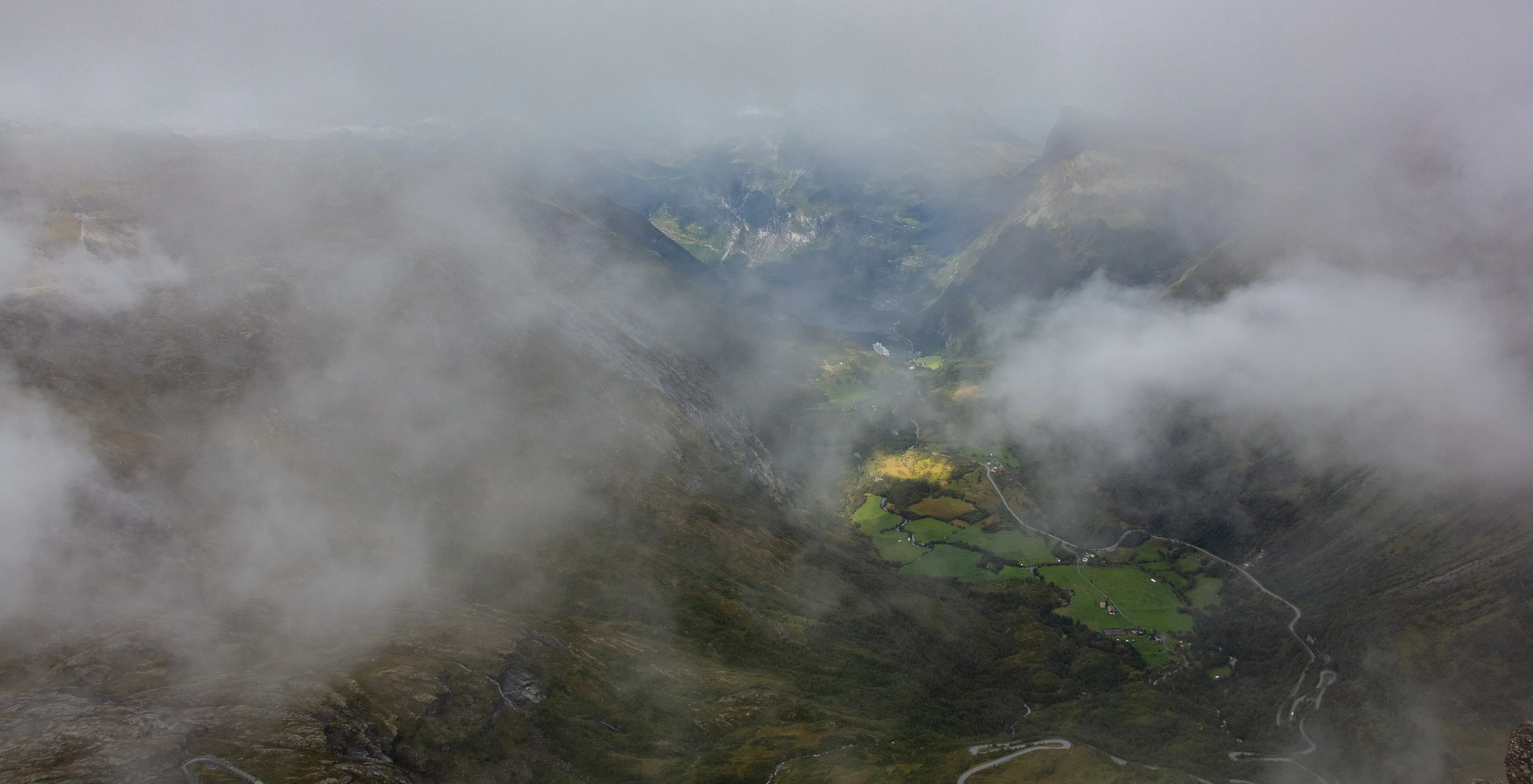
Save Dalsnibba and the exposed Eagle Road and Trollstigen for a clear day. The 1,500 m summit is frequently in cloud that erases the view, and the mountain passes are best in good visibility. If the heights are socked in, the fjord-level plans lose nothing.
Practical essentials
The small things that smooth the day.
Tendering
This is the big one. Most ships anchor and tender ashore; one ship a day uses the SeaWalk pier. The last tender back, not the all-aboard time — is your real deadline, and queues build late in the day.
Money
Card & contactless everywhere. No need for cash. The village is small, so bring what you need before the shops fill up on a busy call.
Wi-Fi
Patchy. Expect a weak signal in the village and almost none out on the fjord or up the mountain roads. Download maps and tickets before you land.
Toilets
Public toilets at the pier and the tourist information building; cafés and the visitor centre for customers.
Accessibility
The waterfront is flat, but the viewpoints are all uphill and reached by bus. Tender boats are difficult for limited mobility. If step-free access matters, hope for a SeaWalk day and ask your ship before booking the heights.
Weather
Layers and a waterproof help even in summer. The fjord can be mild while the 1,500 m summit is cold and in cloud. Check the Dalsnibba webcam before committing to the heights.
Cruise-passenger FAQ
Quick answers before you book.
Do cruise ships dock or tender in Geiranger?
Mostly tender. Geiranger is a tiny village, so large ships anchor out in the fjord and ferry guests ashore by tender, a short 2–10 minute boat ride. A single ship per day can rent the SeaWalk floating pier and walk straight into the village, but it is one ship at a time and rarely your choice, so plan for a tender.
Can large cruise ships still enter the Geirangerfjord in 2026 with the new emission rules?
Yes. From 1 January 2026 the five UNESCO World Heritage fjords require zero emissions for passenger ships under 10,000 GT, but larger cruise ships have until 1 January 2032. So most big-ship calls run as normal in 2026 — over 80 cruise calls are booked for Geiranger, from lines including AIDA, MSC, Celebrity, Costa and TUI. Small expedition vessels under 10,000 GT now need zero-emission certification to enter.
How do I get up to the Dalsnibba Skywalk?
By road. The Geiranger Skywalk on Dalsnibba sits at about 1,500 m, roughly 40 minutes up the Rv63 mountain road (a toll road) from the village. The easiest options are a ship excursion or a local sightseeing-bus tour to the summit; on a clear day it is the highest fjord-view platform in Europe. Keep it for long calls and good visibility.
What's the best plan on a short tender call?
Stay close to the fjord. The walkable village plus the Flydalsjuvet overlook, or a 1.5–2 hour fjord sightseeing cruise past the Seven Sisters, all keep your transfer risk low. Leave the longer Dalsnibba excursions and Trollstigen for calls of eight hours or more.
Is Geiranger worth it on a cruise day?
Yes. The sail in and out is one of the great experiences in cruising, and even a short stop gives you the village, the waterfalls and a clifftop viewpoint. Just respect the tender clock: it is the difference between a perfect day and a missed ship.
How I plan this guide
I've walked these routes myself and base my timings on operator schedules and official sources, re-checked every season. I'm independent — not a cruise line, port authority, or tour operator. Booking links may be affiliate links; they never change which option I recommend or the order I rank them in. Return-to-ship safety always comes first.
Reviewed 19 Sep 2026 · next review before the 2027 season
Sources Geiranger cruise schedules · Stranda Port Authority · Geirangerfjord World Heritage Foundation · Geiranger Fjordservice timetables · Norwegian Maritime Authority (World Heritage fjord zero-emission rules) · Visit Geirangerfjord · GetYourGuide (Geiranger l4560) · official sources