
Molde cruise-day decision guide
The Atlantic Road from Molde: Which Tour, and Is Bud Worth It?
Three tours leave the Molde quay for the Atlantic Road. They all drive the same 8.3 kilometres and cross the same eight bridges. What separates them is what gets bolted on afterwards, and one of those add-ons is not worth the money.
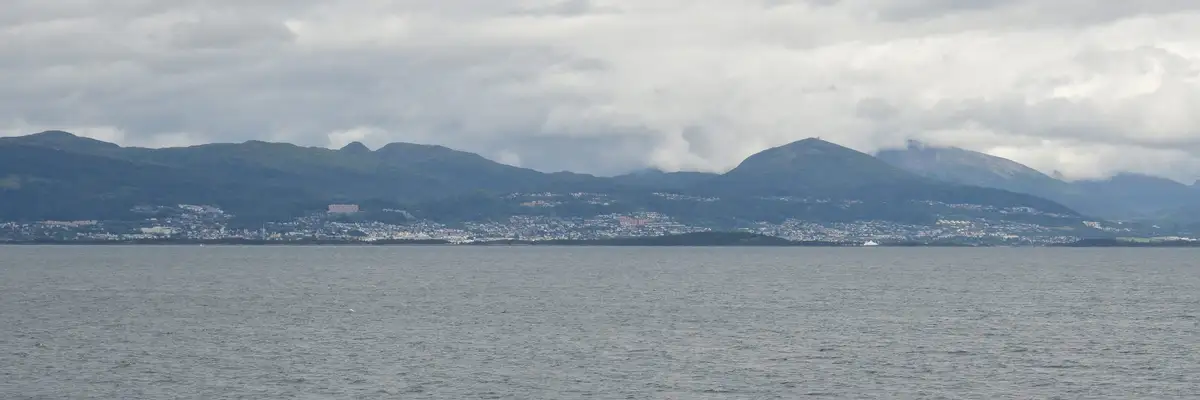
Molde from the water. The Atlantic Road is an hour west of here, out on the open coast.
Molde has one big trip and three versions of it. That sounds like a choice. Mostly it is not.
All three coaches drive west for about an hour, cross the Atlantic Road, and come back. The road is the same road in every case. What you are actually choosing is the add-on, and the prices spread further than the value does.
What is the Atlantic Road?
Eight bridges across open water, strung between islands and skerries on the coast between Molde and Kristiansund. The whole thing runs 8.3 kilometres.
You will see the name written three ways and they all mean this road. Atlantic Road, Atlantic Ocean Road, and Atlanterhavsvegen, which is the Norwegian. Tour desks use all three, sometimes on the same board, so do not go looking for two different trips.
It was built between 1983 and 1989 on the Hustadvika coast, which is one of the more exposed stretches of the Norwegian shoreline. It is part of the national scenic route network, and in 2005 Norwegians voted it the Construction of the Century.
What makes it worth an afternoon is not the length. It is that the road sits low, right down on the water, with nothing between it and the Atlantic. On a calm day it is a pretty drive between islands. On a rough one the sea comes over the deck.
What is the Storseisundet Bridge?
The one in every photograph, and the reason people come.
Storseisundet is the longest and tallest of the eight. It is 260 metres of reinforced concrete cantilever with 23 metres of clearance to the sea, or roughly 750 metres if you count the embankments at each end. It opened on 7 July 1989.
The famous part is an accident of geometry. The deck curves sideways while it climbs, at a gradient of up to eight per cent, and from the approach that makes the road appear to stop in mid-air and drop into the sea. It photographs as though the tarmac simply ends. Hence the nickname, the bridge to nowhere.
It is an illusion. The crossing itself is an ordinary two-lane road and the curve is gentle at normal speeds.
Building it took six years and the work was stopped twelve times by storms. It was a toll road until 1999 and it paid for itself in ten years rather than the fifteen that were planned.
Which Atlantic Road tour should you take from Molde?
The 3.5-hour version. That is the answer for most people and the numbers back it.
It is the cheapest of the three, and it has more reviews than every other Molde tour put together. When the cheapest option is also the most booked by a wide margin, that is usually the market telling you something. It drives the full road, stops for photographs, and comes back over the Varden viewpoint above town.
The other two are the same trip with something added. Four hours adds the fishing village of Bud. Four and a half adds Kvernes stave church. Neither changes the road.
Is the Bud fishing village stop worth it?
This is the one to think twice about.
Bud is a genuine working village on the coast, and it was a fortified German position during the war, so there is history in the ground. But travellers who have taken this tour report the same thing: you arrive and there is not much to do. The stop costs about 300 kroner more than the short tour and adds an hour.
If the road is what you came for, take the 3.5-hour version and keep the money.
What is Kvernes Stave Church?
The add-on that does earn its extra hour.
Kvernes is the only stave church in Norway built after the Middle Ages. It went up between 1631 and 1633, long after the medieval tradition had stopped, which makes it an oddity rather than a survivor. It stands above the fjord on Averoya with turf-roofed farm buildings beside it.
If you want more from the day than a road and a photograph, this is the version to book. It runs four and a half hours, so it wants a normal or long call rather than a short one.
Can you see the Atlantic Road without a tour?
Realistically, no, not on a cruise day.
The road is an hour west of Molde and there is no scheduled service timed to ships. A taxi out and back would cost far more than a coach seat, and the return timing would be entirely your problem.
Molde is a port where I would just book the trip. That is not something I say often on this site, and it is worth saying plainly when it is true. The town itself is 100 metres from the quay and free to walk, so the honest split is simple: walk the town, book the road.
What if the weather is bad?
Go anyway. This is the rare Norwegian excursion that improves in rough weather.
The road sits low on an exposed coast, and when the sea gets up it breaks over the bridges. Autumn storms are what photographers travel for. A grey morning that would ruin a viewpoint does not ruin this.
The Varden viewpoint on the way back is the part that does need clear air, since the whole point of it is the line of peaks across the fjord. If the cloud is low you will get the road and not the panorama, and the road is the better half anyway.
Back to the full guide: Molde cruise port: the Atlantic Road port. If your itinerary also includes the next port up the fjord, Trollstigen belongs to that day: Åndalsnes cruise port.
Quick answers
What is the Atlantic Road?
A 8.3-kilometre stretch of road between Molde and Kristiansund that hops across eight bridges between small islands and skerries on the open coast. It was built between 1983 and 1989, it is part of the Norwegian Scenic Route network, and Norwegians voted it the Construction of the Century in 2005. From Molde it is about an hour each way by road.
What is the Storseisundet Bridge?
The longest and tallest of the eight bridges on the Atlantic Road, and the one in every photograph. It is 260 metres long with 23 metres of clearance to the sea, or about 750 metres including the embankments at each end. It opened on 7 July 1989. The deck curves as it climbs, at a gradient of up to eight per cent, and from certain angles that makes the road look as though it stops in mid-air. That is why it is called the bridge to nowhere. It is an optical illusion and the crossing is ordinary.
Which Atlantic Road tour should you take from Molde?
The 3.5-hour version. It is the cheapest of the three and it has more reviews than every other Molde tour combined, which tells you what people actually book. It covers the full road and returns by the Varden viewpoint above town. The two longer options both run 4.5 hours for the same money: one adds the fishing village of Bud, the other Kvernes stave church, and both take in Farstad beach.
Is the Bud fishing village stop worth it?
It is the weakest of the three add-ons. Bud is a real working village on the coast and it was a fortified German position during the war, but travellers who have taken the tour report that there is little to do once you arrive. It costs about 300 kroner more than the short tour and adds an hour. If the road is what you came for, take the 3.5-hour version.
What is Kvernes Stave Church?
The only stave church in Norway built after the Middle Ages. It went up between 1631 and 1633, long after the medieval stave church tradition had ended, and it stands above the fjord on Averoya with turf-roofed farm buildings beside it. It is the add-on that earns its extra hour. Both long tours run the same 4.5 hours for the same price, so the choice is Kvernes or Bud, not time or money. Kvernes is the one worth it.
Can you see the Atlantic Road without booking a tour?
Not easily from a cruise ship. The road is about an hour west of Molde and there is no scheduled service timed to cruise calls. A taxi there and back would cost far more than a coach seat, and you would carry the risk of getting back late yourself. This is one of the ports where the organised trip is genuinely the sensible option.
Is the Atlantic Road worth doing in bad weather?
Yes, and arguably it is better. The road runs across open water on the exposed Hustadvika coast, and in rough weather the sea breaks over the bridges. Autumn storms are what photographers come for. A grey morning is not a reason to cancel this one, unlike the Varden viewpoint or anything else that depends on a distant view.
How long is the Atlantic Road drive from Molde?
About an hour each way. The shortest organised tour is three and a half hours door to door, which covers the drive out, the road itself with photo stops, and the return by way of the Varden viewpoint above Molde. The longer tours run four and four and a half hours.
Sources checked
These are the public source families used for this guide. Always confirm live schedules, weather, and operator details before booking.
- Nasjonale turistveger / Statens vegvesen The Atlantic Road as a Norwegian Scenic Route, the 8.3-kilometre length and the eight bridges.
- Storseisundet Bridge records The 260-metre span, 23 metres of clearance, roughly 750 metres including embankments, the 7 July 1989 opening, and the six-year build interrupted by twelve storms.
- West Norway Travel Tour durations, the three itineraries sold from the Molde quay, and the two-quay meeting-point instruction.
- Molde og Romsdal Havn, via the Cruise Norway port document The Molde cruise berths and the 100-metre distance from the quay to the town centre.
- Last checked Reviewed 19 September 2026. Prices, timetables and seasonal openings change. Confirm with the operator before you sail.